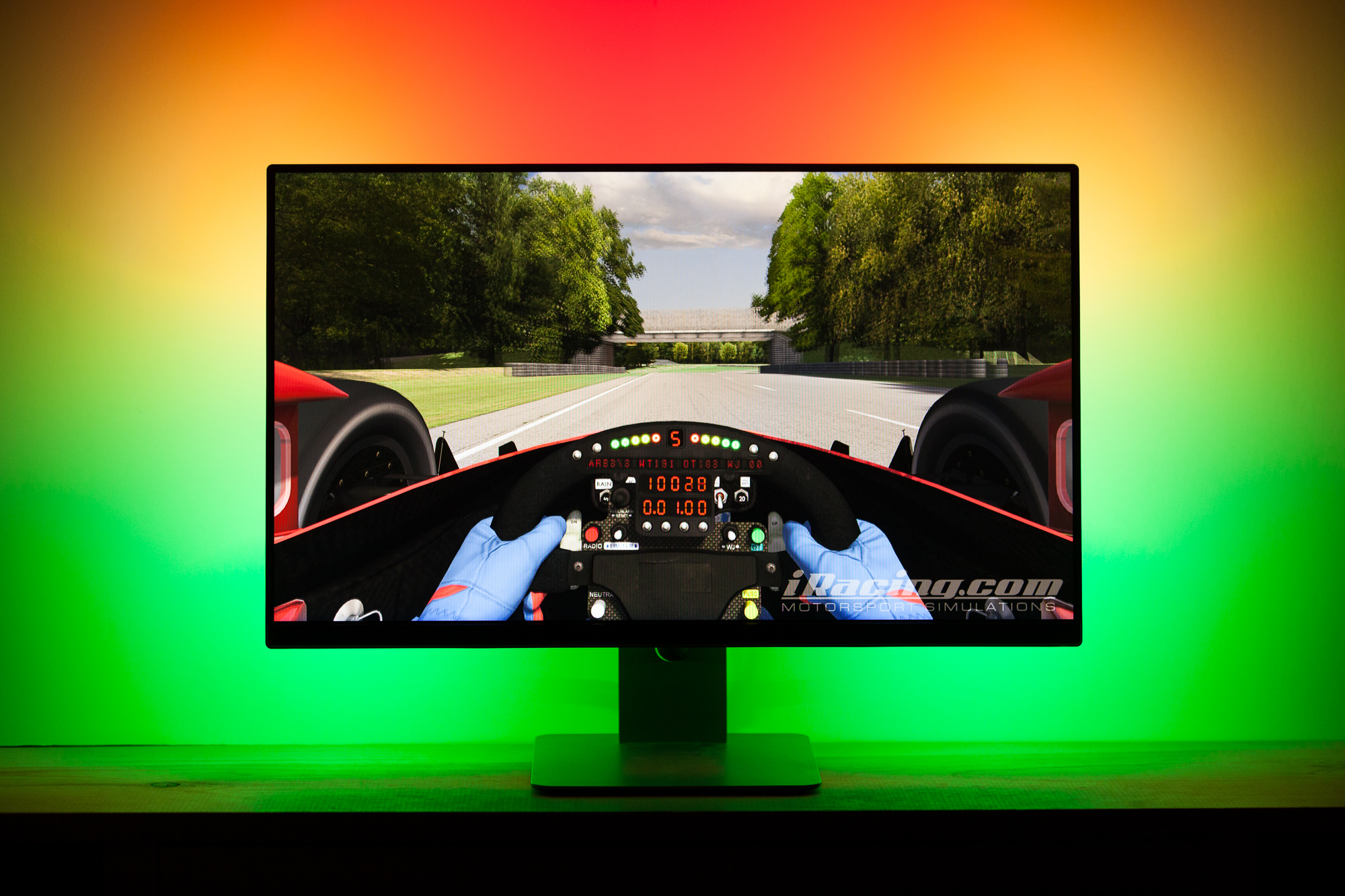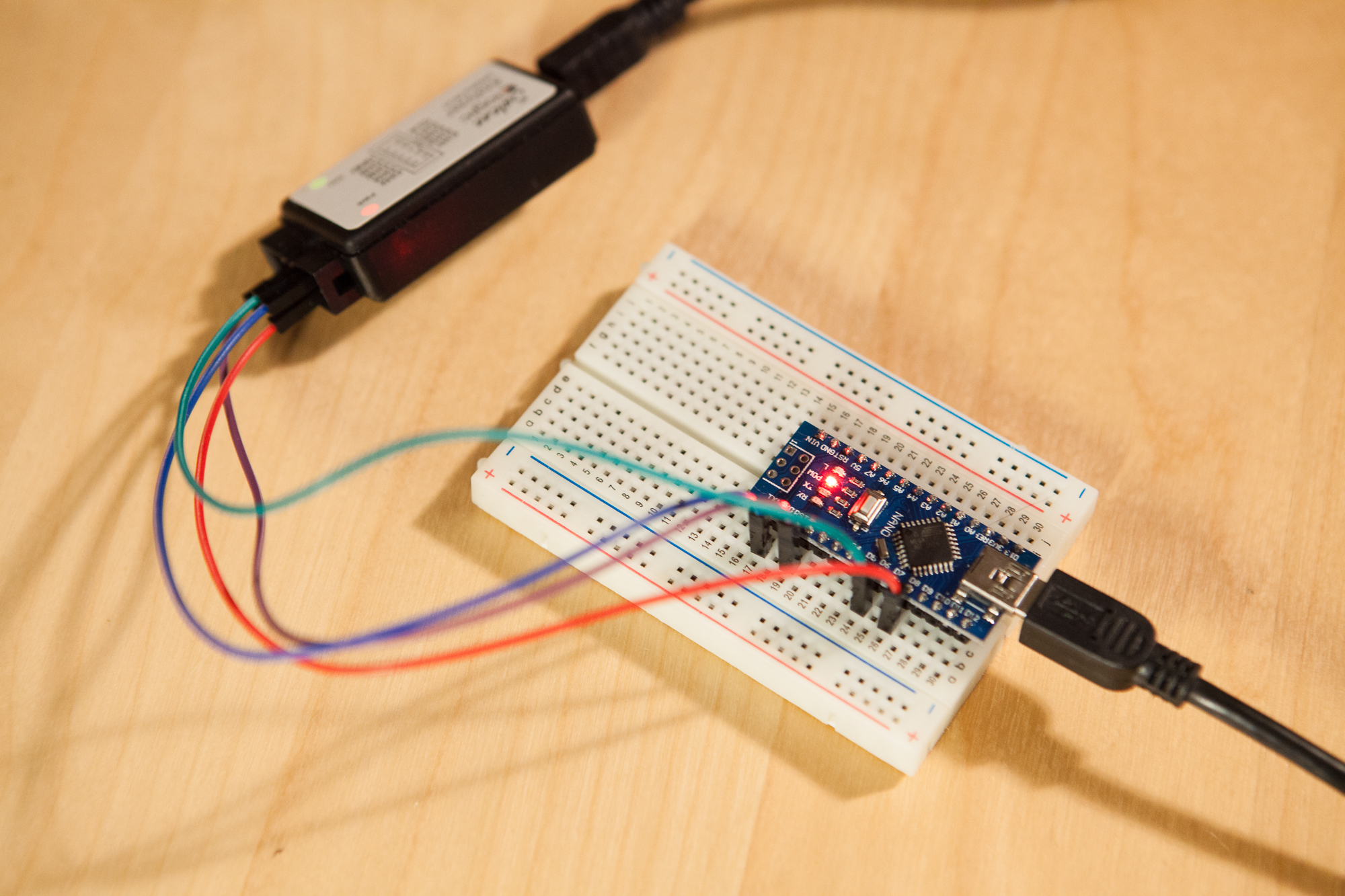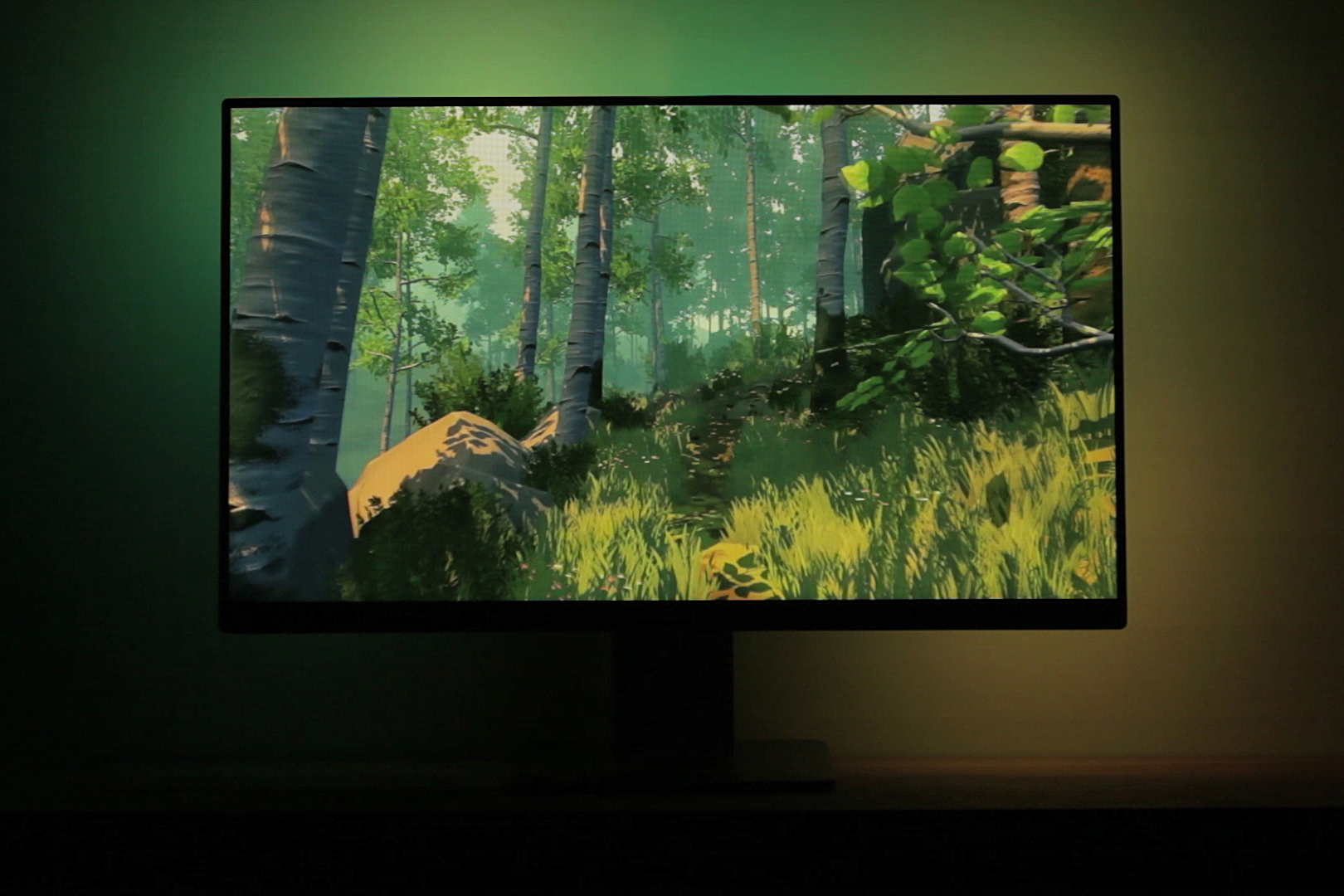
We’re done! The ambilight is in place behind my monitor and has been running great. To finish up, I wanted to reflect a bit on what I learned and talk about where to go from here.
This post is part of a series on creating a DIY ambilight using Adalight and WS2812B LEDs. Check out the project page here.
Things Learned
Although I had gotten my feet wet with addressable LEDs for the ‘Footwell NeoPixels’ project (which is currently on the back burner…), this was my first finished project using them. For being so inexpensive, they are powerful and ridiculously easy to use. Look for more projects featuring them in the future.
On the software side, I learned quite a bit about serial structure and speed. I also learned how to use Git, created a Git repository for my own Adalight software, and contributed to a few open source projects along the way.
I also learned how to design a PCB using Eagle and how to etch copper clad boards at home. Although Eagle is now defunct (thanks Autodesk!), I’m sure I can transfer the basic ideas to another CAD program.
Further Improvements
As with any project, there is more I’d like to do with this eventually.
Top of my list is extending the LED leads so the monitor can be tilted through its entire range. This isn’t an issue at the moment, but it’s poor design to build something that adds unintentional limitations to the existing hardware.
I’d also like to design and build a version 2 PCB, which ditches the Arduino Nano and has all of the Atmega components onboard. I’d also like to add a few other things, such as:
- Headers for the LED leads
- Calibration setting jumper
- Checksum status LED
- Multiple LED data output leads (for expansion)
Prismatik, as useful as it is, could also use some attention to improve the color calibration UI and add more advanced support for the Adalight protocol. I’ve submitted feature requests to psieg’s fork, but I may find myself contributing some code to that project in the future.
Conclusion
In the words of the great Porky Pig, “ble, ble, ble, that’s all folks!” Thanks for following along. Onto the next!